
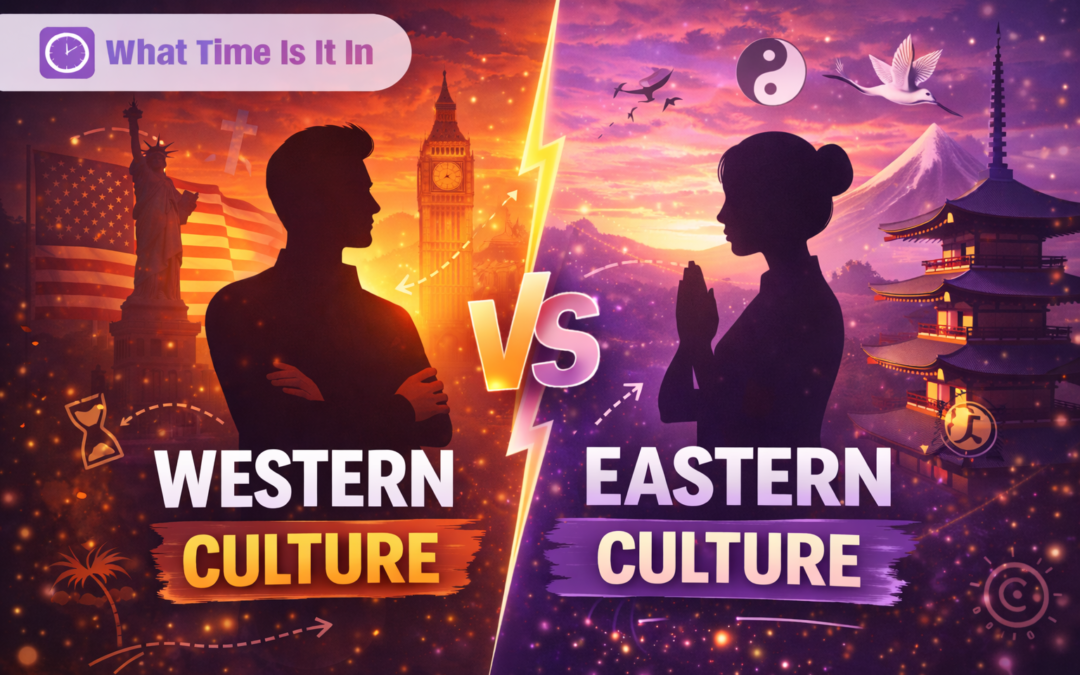
Western culture vs. Eastern culture remains one of the most searched comparisons because you interact with both systems daily through business, education, media, and travel.
When you understand how these cultural frameworks shape communication, authority, time management, and family life, you reduce misunderstandings and build stronger relationships.
This guide provides a precise, research-informed explanation of Western vs. Eastern cultures so you can navigate global environments with confidence and clarity.
Individualism vs Collectivism
When you examine Western culture vs. Eastern culture, the most defining difference lies in how identity is formed. In Western societies such as the United States, you are encouraged to prioritize personal achievement, independence, and self-expression as markers of success. In many Eastern societies, you are expected to consider family reputation, community harmony, and collective well-being before making major life decisions.
This difference affects how you introduce yourself, pursue careers, and measure accomplishment. You may notice that Western education systems reward individual performance and outspoken participation, while Eastern classrooms often emphasize discipline and group coordination.
According to cross-cultural research influenced by Geert Hofstede’s framework, the United States ranks among the highest in individualism, while countries such as China and Japan rank significantly lower, reinforcing collectivist norms.
Communication Styles and Context
Communication patterns clearly illustrate the differences between Western and Eastern cultures in daily interactions. In Western contexts, you are expected to speak directly, clarify your expectations, and express disagreement openly without viewing it as disrespect. In Eastern contexts, you often communicate indirectly, using tone, silence, and nonverbal cues to preserve harmony and avoid public embarrassment.
This contrast shapes negotiations, friendships, and workplace collaboration. When you deliver feedback in a Western setting, clarity is valued even if it sounds blunt, but in an Eastern setting, softened language signals respect and emotional intelligence. If you manage multicultural projects, principles from discussions such as how to manage time zones in global teams illustrate how cultural awareness directly influences coordination and communication efficiency.
Hierarchy and Authority
Authority structures reveal another layer of Western culture vs Eastern culture differences. In Western environments, you often see flatter hierarchies in which employees question leadership decisions and address supervisors by their first names. In Eastern environments, you typically observe formal respect for elders, managers, and teachers, with clear boundaries between ranks.
This distinction affects decision-making and leadership style. Western managers often encourage debate during meetings, while Eastern leaders may expect deference and consensus-building before finalizing plans. When you understand these expectations, you avoid misinterpreting silence as agreement or questioning as rebellion.
Decision-Making and Risk-Taking
Decision-making approaches differ significantly across cultural lines. In Western settings, you are encouraged to act quickly, take calculated risks, and view failure as a learning opportunity. In Eastern settings, you may notice a preference for thorough consultation, long-term thinking, and minimizing risk to protect collective stability.
This difference influences entrepreneurship and innovation. Silicon Valley’s high-risk startup culture contrasts with East Asian corporate models that emphasize gradual expansion and sustainable growth. If you compare time-sensitive processes across cultures, insights into questions like ‘why do we have time zones’ demonstrate how structured systems can reflect deeper societal priorities around order and coordination.
Time Orientation and Punctuality
Time perception offers one of the most practical illustrations of Western culture vs. Eastern culture. Western societies often treat time as linear and measurable, where punctuality signals professionalism and missed deadlines damage credibility. In many Eastern contexts, time remains important but may bend around relationship priorities and ceremonial traditions.
You will notice this difference in business scheduling and social gatherings. Western professionals frequently rely on precise calendars and countdown systems to manage commitments efficiently. Tools such as a Countdown Timer reflect the Western emphasis on measurable progress and deadline accountability in high-performance environments.
Work-Life Integration
Work culture reveals how values translate into daily routines. In Western countries, you often see a stronger separation between professional life and personal time, with paid leave policies and weekend boundaries designed to protect individual well-being. In Eastern countries, you may observe longer working hours and a cultural expectation of loyalty to employers.
This pattern connects directly to social structure. When family identity intertwines with professional achievement, extended dedication to work becomes a sign of honor and reliability. However, globalization continues to reshape these boundaries as multinational companies adopt hybrid policies that combine productivity with employee wellness.
Education and Learning Styles
Educational systems highlight big philosophical differences. Western classrooms typically encourage open debate, creative thinking, and individual projects that showcase personal initiative. Eastern classrooms often emphasize memorization, discipline, and respect for authority as foundations for academic excellence.
These methods produce different strengths. Western students may excel in innovation and presentation skills, while Eastern students often demonstrate exceptional analytical discipline and mathematical performance. International assessment data from the Programme for International Student Assessment frequently show strong outcomes from East Asian education systems, underscoring the effectiveness of structured learning models.
Religion, Philosophy, and Worldview
Spiritual traditions significantly shape Western culture vs Eastern culture. Western societies have historically been influenced by Judeo-Christian ethics, emphasizing personal moral responsibility and individual salvation. Eastern cultures draw from traditions such as Buddhism, Confucianism, Taoism, and Hindu philosophy, which stress balance, harmony, and interconnectedness.
These beliefs shape daily habits and ethical frameworks. In Western contexts, you may prioritize personal rights and freedom of choice. In Eastern contexts, you may prioritize social harmony and collective duty as moral imperatives.
Emotional Expression and Social Etiquette
Emotional norms differ in visible ways. In Western environments, you are often encouraged to express feelings openly, advocate for your needs, and display enthusiasm publicly. In Eastern environments, emotional restraint may signal maturity, humility, and respect.
This difference influences conflict resolution. Western debates may appear intense yet remain professional, while Eastern disagreements often occur privately to preserve dignity. Recognizing these norms prevents you from misreading calm silence as indifference or expressive speech as aggression.
Business Relationships and Trust
Business culture reflects how trust develops across societies. In Western markets, contracts and written agreements frequently define relationships, and transactions may proceed quickly once legal terms are clear. In Eastern markets, long-term relationship-building often precedes formal agreements, and trust grows gradually through repeated interaction.
You must adapt your expectations accordingly. Entering an Eastern partnership without investing time in relationship-building can stall negotiations. Conversely, excessive formalism in a Western startup environment may slow innovation and collaboration.
Globalization and Cultural Convergence
Globalization is narrowing gaps while preserving core distinctions. You now see Western companies adopting collective wellness practices and Eastern companies embracing innovation-driven competition. Digital communication accelerates this blending, but cultural roots continue to shape behavior.
As international travel, remote work, and digital platforms expand, your ability to interpret western culture vs eastern culture becomes a competitive advantage. Cultural intelligence enhances negotiation outcomes, reduces conflict, and builds sustainable cross-border partnerships.
Conclusion
Western culture vs eastern culture is not a battle between opposites but a comparison of complementary value systems that shape how you communicate, work, and lead. When you understand differences in individualism, hierarchy, decision-making, time orientation, and emotional expression, you reduce friction and increase mutual respect.
By recognizing the strengths within both systems, you position yourself to thrive in a global society where cultural fluency is no longer optional but essential.
FAQs
What is the main difference between western culture vs eastern culture?
Western culture vs eastern culture mainly differs in individualism and collectivism. Western societies emphasize personal independence, self-expression, and individual achievement, while Eastern societies prioritize family, community harmony, shared responsibility, and collective success in both social and professional environments.
How does communication differ in western culture vs eastern culture?
In western culture vs eastern culture, communication styles contrast significantly. Western communication is direct, explicit, and opinion-driven, whereas Eastern communication is indirect, context-based, and focused on maintaining harmony, avoiding confrontation, and protecting social dignity in conversations.
Why is hierarchy more visible in eastern societies?
Hierarchy appears stronger in many Eastern societies because cultural traditions emphasize respect for elders, authority, and seniority. In western culture vs eastern culture comparisons, Western systems typically support flatter organizational structures and encourage questioning leadership.
How does decision-making vary between Western and Eastern cultures?
Decision-making in Western cultures often values speed, individual authority, and calculated risk-taking. In eastern culture contexts, decision-making tends to involve group consultation, consensus-building, and long-term stability considerations to protect collective interests and relationships.
What role does time play in western culture vs eastern culture?
Time management differs greatly in western culture vs eastern culture. Western societies treat time as linear and deadline-driven, while Eastern cultures may prioritize relationships and context over rigid scheduling, although punctuality remains important in professional settings.
How do work ethics compare across Western and Eastern cultures?
Western work culture often promotes work-life balance and personal boundaries. In eastern culture environments, extended work hours and loyalty to employers can reflect dedication, collective responsibility, and long-term commitment within professional and social structures.
How do education systems reflect cultural differences?
Western education encourages debate, creativity, and independent thinking. Eastern education often emphasizes discipline, memorization, and respect for teachers, which contributes to strong academic performance, particularly in mathematics and science across international assessments.
How do religious and philosophical traditions influence culture?
Western cultural values are historically shaped by Judeo-Christian principles emphasizing personal morality and rights. Eastern traditions such as Buddhism, Confucianism, and Taoism influence social harmony, respect for hierarchy, and interconnectedness within communities.
How does emotional expression differ between cultures?
In western culture vs eastern culture, emotional expression varies considerably. Western societies often support open emotional communication and assertiveness, while Eastern societies value emotional restraint, subtle expression, and conflict avoidance to preserve harmony.
Why is cultural awareness important in a globalized world?
Understanding western culture vs eastern culture helps you navigate international business, education, and communication effectively. Cultural awareness reduces misunderstandings, strengthens partnerships, and enhances cross-border collaboration in today’s interconnected global economy.